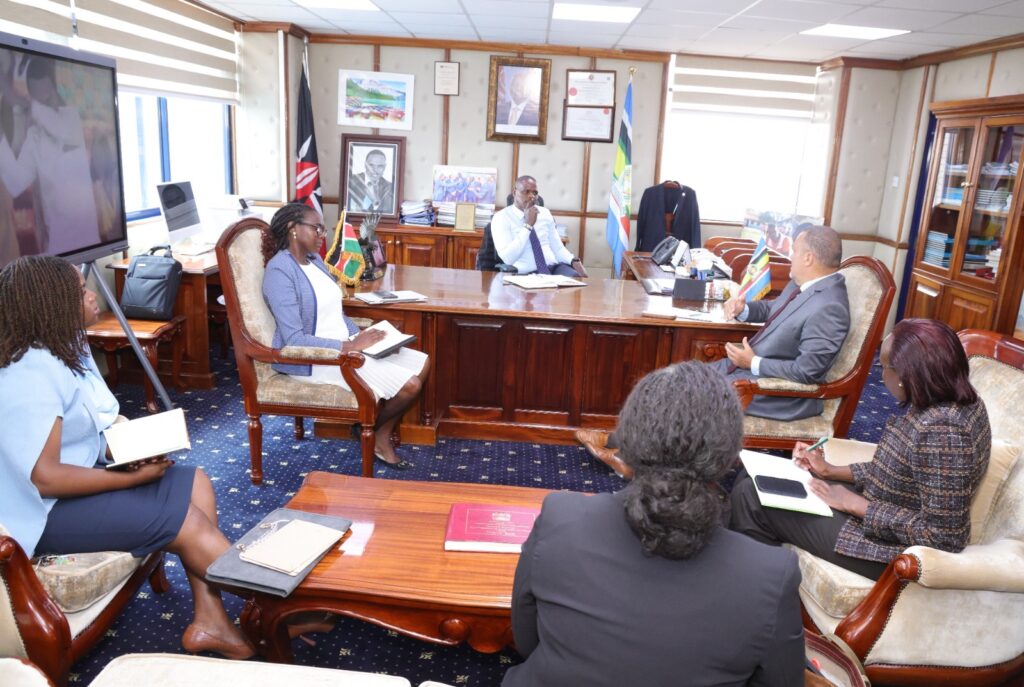
Kenya has strengthened its partnership with the United Nations Development Programme (UNDP) in a renewed push to accelerate climate action, biodiversity protection, and environmental resilience, signaling a major step in the country’s effort to confront escalating ecological threats. The renewed collaboration was reaffirmed this week in Nairobi during high level talks between Kenya’s Principal Secretary for Environment and Climate Change, Festus Ngeno, and UNDP Kenya Resident Representative Jean-Luc Stalon, where both sides committed to expanding joint investments in climate resilience, ecosystem restoration, and green development initiatives.
The partnership comes at a critical time for Kenya, as the country faces intensifying drought cycles, biodiversity loss, land degradation, and climate related economic pressures affecting millions of livelihoods. Kenya is seeking stronger institutional and financial mechanisms to respond to these challenges, and UNDP remains one of its most strategic development partners in delivering technical expertise, climate financing access, and implementation support.
A central focus of the renewed partnership is scaling up biodiversity conservation through integrated landscape programs that connect ecosystem restoration with community resilience. Among the flagship initiatives discussed is the IMKA Gold Project, currently active in Kakamega, Vihiga, Narok, and Migori counties, which supports sustainable land management, conservation livelihoods, and restoration of degraded ecosystems. These projects are designed not only to protect fragile habitats but also to strengthen income opportunities for local communities living closest to environmental risk zones.
Kenya is also working closely with UNDP to improve access to international climate finance, including emerging global mechanisms such as the Fund for Responding to Loss and Damage. This is especially important as developing countries push for fairer climate financing arrangements that help vulnerable nations recover from irreversible climate impacts. UNDP has increasingly emphasized integrated climate and biodiversity finance as a global priority, linking nature restoration directly with economic resilience and sustainable development planning.
The strengthened alliance aligns with UNDP Kenya’s 2022–2026 country programme, which identifies nature based solutions, inclusive green growth, and resilience building as core pillars of its national support strategy. For Kenya, this means advancing climate governance systems that can simultaneously reduce emissions, protect biodiversity, and help communities adapt to worsening climate extremes.
Beyond policy commitments, the renewed Kenya UNDP partnership reflects a broader shift toward climate action models that integrate environmental protection with social equity. As Kenya positions itself as a regional climate leader in Africa, this collaboration is expected to play a defining role in shaping how the country meets its Paris Agreement targets, restores ecosystems, and safeguards biodiversity for future generations.